

WHAT MATTERS IN RECYCLING - TECHNICAL VS. ACTUAL
Understanding California’s SB 343: Why “Actually Recycled” Matters
California’s Senate Bill 343 (SB 343), also known as the Truth in Labeling for Recyclable Materials law, has influenced packaging decisions well beyond California’s borders. Although it is a California law, many manufacturers distribute products nationwide and prefer to use a single package and a consistent set of labeling claims across all markets. As a result, California’s definition of “recyclable” is disrupting packaging design and marketing throughout the United States.
The Difference Between “Technically Recyclable” and “Actually Recycled”
A central concept behind SB 343 is the distinction between materials that are technically recyclable and those that are actually recycled.
- A material is technically recyclable if recycling technology exists somewhere to process it. Under the right conditions, with the proper equipment and facilities, the material can be collected, sorted, and transformed into a new product.
- A material is actually recycled when it is routinely collected, sorted, processed, and sold into viable end markets through the recycling systems available to consumers.
SB 343 focuses on this second definition, specifically what is actually recycled in California. The law evaluates recycling based on real-world, or state-wide, performance rather than theoretical capability.


Why This Distinction Was Introduced
For many years, packaging often displayed recycling symbols because the material itself could be recycled under ideal circumstances. Still today, there are reasons many of these packages are not consistently recycled.
- Some were not accepted in local curbside recycling programs.
- Some could not be efficiently sorted at recycling facilities.
- Some recycling facilities lacked sufficient processing capacity.
- The recovered material had limited or inconsistent end markets.
As a result, many packages labeled as recyclable ultimately entered landfills rather than being recycled.
SB 343 was enacted to better align recyclability claims with actual recycling outcomes. Under the law, a package generally must demonstrate that it is routinely:
- Collected,
- Sorted,
- Reprocessed, and
- Purchased for use in manufacturing new products.
The emphasis is on whether the material successfully moves through the existing recycling system.
The Role of Recycling Infrastructure
Whether a package qualifies as recyclable under SB 343 depends heavily on the recycling infrastructure available.
Consider two communities handling the same type of plastic package:
- One community has advanced sorting equipment, processing facilities, and strong markets that purchase the recovered material.
- Another community lacks the necessary equipment or buyers, causing the same package to be discarded instead of recycled.
The package itself has not changed. The difference lies in the capabilities of the recycling system.
This illustrates an important principle: recyclability is influenced not only by material science, but also by collection systems, sorting technology, processing capacity, and market demand.
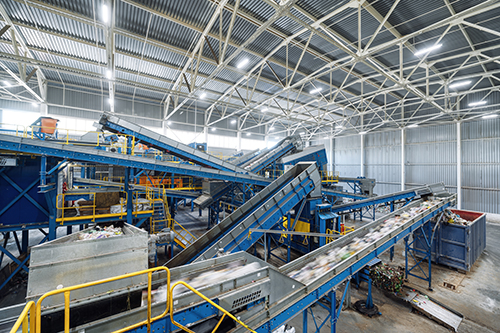
Would Additional Recycling Facilities Change the Outcome?
Expanding recycling infrastructure would likely increase the number of materials that qualify as recyclable under laws such as SB 343.
Improvements could include:
- Additional material recovery facilities.
- Enhanced optical sorting technology.
- Greater washing and processing capacity.
- Stronger domestic markets for recovered materials.
- Expanded acceptance of packaging formats that are currently difficult to recycle.
As recycling systems improve, more materials could satisfy the performance criteria established by the law.
However, improved infrastructure alone would not eliminate the need for standards governing recyclability claims.
Why Truth-in-Recycling Standards Still Matter
Even with highly developed recycling systems, there remains value in ensuring that recyclability claims are supported by measurable evidence.
Standards such as SB 343 help promote:
- Accurate information for consumers.
- Consistent labeling practices.
- Packaging designs that are compatible with existing recycling systems.
- Greater transparency regarding recycling performance.
The goal is to ensure that recycling claims reflect what consumers can realistically expect to happen after a package is placed in the recycling bin.
A Shift in Perspective
Historically, the question surrounding packaging often was: “Can this package be recycled?”
SB 343 reframes the discussion by asking: “Is this package routinely recycled within the recycling system available to consumers?”
This distinction represents a significant change in how recyclability is evaluated. Rather than focusing solely on the physical properties of a material, the law considers the entire recycling process—from collection through end-market demand.
As recycling technology and infrastructure continue to evolve, the list of materials that qualify as recyclable may also change. In this way, recyclability becomes a reflection not only of material design but also of the capabilities and performance of the recycling system itself.
Follow us for more articles exploring packaging design, recyclability, sustainability, and the evolving science behind plastic recycling.