

Behind Change: Costs, Responsibility, & Behaviors
Recycling Infrastructure and Consumer Behavior: Which Should Change?
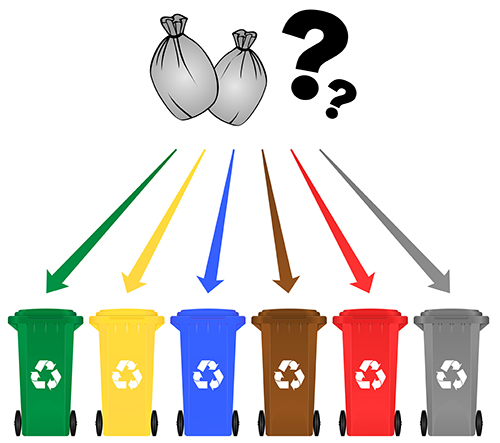
Most people are willing to recycle. The problem is that they want recycling to be simple.
When consumers finish using a glass jar, plastic container, paperboard package, or metal can, they generally want to place it in a recycling bin and move on. They do not want to study the package, analyze every material, remove multiple labels, separate bonded components, or research whether their local recycling facility accepts that particular item.
This raises an important policy question:
Should consumers be expected to become recycling experts, or should recycling systems be designed around the way people naturally behave?
The answer has implications for packaging design, recycling infrastructure, environmental claims, public education, and government policy.
Convenience Strongly Influences Recycling Behavior
Research into recycling behavior has consistently identified convenience and confusion as major factors affecting participation.
People are more likely to recycle when the process:
- is easy to understand,
- is readily available,
- requires few additional steps,
- and does not force them to make complicated disposal decisions.
Even consumers who actively look for recycling information may still struggle to determine what they should do.
Research cited by The Recycling Partnership found that:
- 78% of consumers look for recycling information on packaging.
- 63% remain confused after reading the label.
- 82% assume the recycling information on the package is accurate.
- 82% believe it is dishonest to label something recyclable if it will not actually be turned into a new product.
These findings suggest that the problem is not simply a lack of consumer interest. Many consumers want to recycle correctly but find the system too complicated.

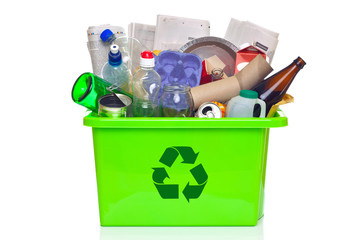
What Is Wishcycling?
When consumers are uncertain, they may place an item in the recycling bin and hope the recycling facility can handle it. This behavior is commonly called wishcycling.
The consumer’s reasoning may be as simple as: “It is plastic, so I will put it in the recycling bin and let the recycling system figure it out.” Although usually well-intentioned, wishcycling can introduce materials that a local recycling program cannot process.
One review cited in the original research estimated that approximately 17% of material entering community recycling streams is already considered contamination. An additional portion may be discarded later because of contamination, sorting limitations, or the absence of a practical recycling market.
Wishcycling therefore illustrates a larger challenge: the recycling system often depends on consumers making decisions they may not have enough information to make.
Recycling Is More Than a Consumer Decision
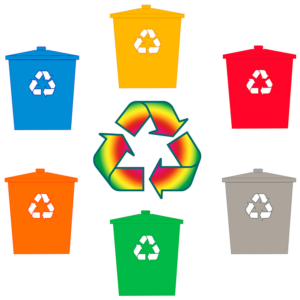
Recycling should be viewed as a connected system with four primary components:
- Packaging and product design
- Consumer behavior
- Collection and sorting infrastructure
- Markets for recovered materials
Improving only one part of the system will have a limited effect.
A package may be technically recyclable, but that does not necessarily mean it will be collected, correctly identified, economically separated, processed, and sold for use in another product.
For successful recycling to occur, each stage must work.
Would Better Recycling Infrastructure Help?
A nationwide investment in recycling infrastructure could make the process easier for consumers and increase the amount of material recovered.
Potential improvements could include:
- advanced optical sorting systems,
- artificial intelligence and vision technology,
- robotic sorting equipment,
- improved washing systems,
- expanded plastics processing capacity,
- more consistent collection programs,
- and greater standardization across communities.
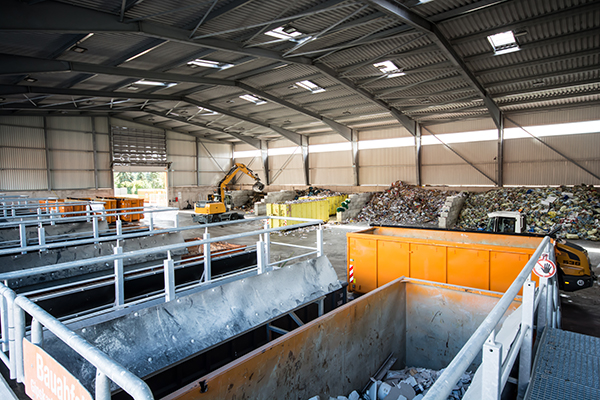
Modern recycling facilities can identify and recover materials that older facilities could not process effectively. Expanding these capabilities could reduce contamination, recover more useful material, and reduce the amount of potentially recyclable packaging sent to landfills.
It could also make recycling claims more consistent. Packaging manufacturers would have greater confidence that materials accepted by consumers were supported by actual processing capabilities.
Recycling Infrastructure Still Has Limits
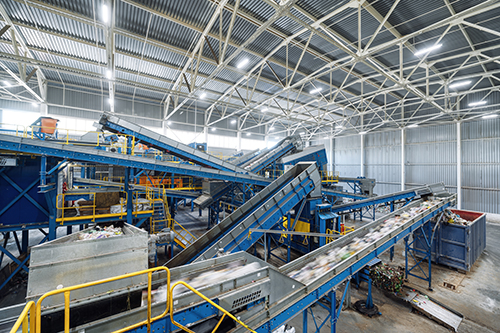
Even the most advanced recycling facility cannot economically recover every material or package design.
Difficult materials may include:
- multilayer plastic films,
- plastic permanently bonded to paper,
- certain labels and adhesives,
- heavily contaminated food packaging,
- and packages made from multiple inseparable materials.
Some contamination can be removed during washing and processing. Other contamination cannot be separated without damaging the recovered material or making the recycling process too expensive.
At some point, the cost of collecting, sorting, cleaning, and processing a material may exceed the value of the material recovered.
Infrastructure can improve recycling performance, but infrastructure alone cannot eliminate every technical and economic limitation.
Two Different Approaches to Recycling Policy
Much of the recycling debate comes down to where responsibility should be placed.
One approach says: Packaging should not be called recyclable unless the existing recycling system can actually collect and process it. This approach places greater responsibility on manufacturers to design packaging that works within today’s recycling system.
A second approach says: Recycling infrastructure should be improved so consumers are not required to analyze every package before disposing of it. This approach places greater responsibility on government, recycling operators, and public investment to accommodate the materials consumers already use.
These approaches are not necessarily incompatible. Manufacturers can improve packaging design while government and industry simultaneously improve collection, sorting, and processing infrastructure.
How California’s SB 343 Fits Into the Debate
California Senate Bill 343 reflects the first approach. The law focuses on whether materials are actually recycled within the existing system rather than whether they are theoretically capable of being recycled under ideal conditions.
In simplified terms, the policy position is:
Do not tell consumers that something is recyclable unless the recycling system can demonstrate that it is routinely collected, sorted, processed, and returned to productive use.
This approach is intended to reduce misleading recycling claims and consumer confusion. However, it also raises a broader question: should policy primarily restrict claims to match current recycling capabilities, or should it invest more aggressively in expanding those capabilities?
Should the System Adapt to the Consumer?
Behavioral research supports the idea that recycling participation is strongly influenced by convenience. People do not want to make dozens of complicated disposal decisions every week. When the process becomes more difficult, both participation and accuracy can decline. That suggests recycling systems should be developed around realistic consumer behavior.
Clear labels and public education remain important, but education alone may not overcome a system that varies from one community to another and requires consumers to understand packaging materials, adhesives, coatings, contamination levels, and local processing capabilities.
A more effective system would make the correct choice the easiest choice.
Who Should Pay for Recycling Improvements?
The greatest disagreement may not be over whether recycling infrastructure should improve. The disagreement is often over who should pay for those improvements.
Potential funding sources include:
- taxpayers through public infrastructure investment,
- manufacturers through packaging redesign and producer responsibility programs,
- consumers through higher product prices,
- recycling operators and material purchasers,
- or a combination of these groups.
Extended producer responsibility programs attempt to distribute more of the cost to the companies that introduce packaging into the market. Public infrastructure programs place more of the responsibility on government. Product pricing ultimately transfers at least some costs to consumers.
In practice, the most workable solution may involve shared responsibility.
A More Practical Path Forward
Recycling will not improve through labeling changes alone.
A successful system must combine:
- packaging designed for practical recovery,
- clear and consistent consumer instructions,
- convenient collection programs,
- modern sorting and processing equipment,
- reduced differences between local recycling programs,
- and dependable markets for recycled materials.
Consumers should make a reasonable effort to recycle correctly. Manufacturers should consider the full life cycle of their packaging. Government and recycling operators should continue developing systems capable of handling the materials used in modern commerce.
The goal should not be to assign all responsibility to one group.
The goal should be to create a recycling system in which consumers can make simple decisions and trust that the system behind the recycling bin is capable of completing the process.
The Central Question
People are generally going to choose the easiest available disposal method. Recycling policy should recognize that reality.
Instead of expecting every consumer to become a specialist in packaging materials, adhesives, labels, coatings, and local recycling rules, the better long-term strategy may be to design packaging and recycling infrastructure around normal human behavior. The recycling system works best when doing the right thing is also the easiest thing.
Follow us for more articles exploring packaging design, recyclability, sustainability, and the evolving science behind plastic recycling.