

Recycling Knowledge and Misconceptions
What Really Happens to Plastic Packaging After You Throw It Away?
Every day, consumers purchase products packaged in plastic—from household batteries and hardware to dishwasher pods and personal care products.
Many of these packages include labels highlighting product features, safety information, or branding. Batteries are commonly sold in blister packs sealed to paperboard. Screws and nails are often packaged in clear plastic clamshells with adhesive labels. Laundry and dishwasher pods may come in rigid plastic containers with labels wrapped around the container, the lid, or both.
But what happens to these packages after the product has been used?
Where Does Plastic Packaging Go?
When you’re finished with a plastic package, what do you typically do?
- Throw it in the household trash.
- Place it in the recycling bin.
Many people assume there is a single correct answer, but the reality is more complicated.
According to the U.S. Environmental Protection Agency (EPA), approximately 14.5 million tons of plastic packaging are generated in the United States each year. Of that total:
- 13.6% (1.98 million tons) is recycled.
- 69.4% (10.09 million tons) is landfilled.
- 16.9% (2.46 million tons) is converted to energy through combustion.
These statistics reveal an important fact: most plastic packaging does not become new plastic products.
However, they don’t tell the entire story. While they show where plastic ultimately ends up, they don’t explain the path it took to get there—or why so much recyclable material never actually gets recycled.
Consumer Assumptions vs. Reality
Public awareness of recycling has never been higher. Consumers want to purchase products that are environmentally responsible, and manufacturers increasingly identify packaging with recycling information.
As a result, many consumers assume one of two things:
- If it has a recycling symbol, it will be recycled.
- Paper labels don’t affect recyclability.
Unfortunately, neither assumption is always correct.
Whether a plastic package can be successfully recycled depends on many factors, including labeling, the package design, the materials used, and the capabilities of the local recycling system.
Why Labels Matter
When labels, paper fibers, or adhesives cannot be separated from the plastic, they may:
- contaminate the recycled plastic,
- leave adhesive residue,
- interfere with optical sorting equipment,
- reduce the quality of recycled resin, or
- cause an otherwise recyclable package to be rejected.
Paper labels, sleeves, and adhesives can sometimes interfere with the recycling process. Several factors determine whether they become a problem.
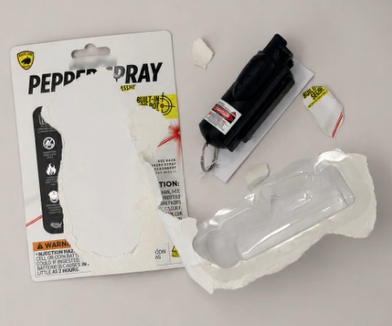
Bits of paperboard backing clings around the edges of the plastic. Label Size
- Small labels are often removed during recycling with little difficulty.
- Large wrap-around labels or full paper sleeves can make sorting and processing more challenging.
Adhesive Type
- Many pressure-sensitive adhesives are designed to wash away during recycling.
- Permanent adhesives may remain attached and contaminate recycled plastic.
This doesn’t mean paper labels always make plastic non-recyclable. A more accurate statement is:
Paper labels and adhesives can reduce recyclability if they cannot be effectively removed during the recycling process.
That distinction is important—and one many consumers are unaware of.
Managing Package Design
The packaging industry continues to improve package designs that are more compatible with today’s recycling systems.
Many manufacturers are moving toward:
- wash-off adhesives,
- plastic labels that recycle with the package,
- direct printing on containers,
- removable sleeves, and
- packaging designed to meet recognized Design for Recycling guidelines.
These improvements, combined with expanded recycling infrastructure and increased consumer education, have the potential to increase the amount of plastic packaging that is successfully recycled.
Plastic Resin
Not all plastics behave the same during the recycling process.
Each resin type has unique physical and chemical properties, so recycling systems are designed to handle them differently. Some plastics have long-established collection and processing systems, while others require specialized equipment or different recycling methods.
As recycling technologies continue to evolve, manufacturers are increasingly designing packaging with resin selection and recycling compatibility in mind. Understanding how different plastics are processed helps improve the quality and efficiency of recycling throughout the value chain.

Recycling Facility Capabilities
Not all recycling facilities use the same equipment. Some modern facilities can successfully remove labels and separate contaminants, while others cannot. As a result, the same package may be accepted in one community and rejected in another.
How Much Does the Public Know?
Awareness varies considerably among different groups.
- Consumers generally have limited knowledge of how labels, adhesives, and package design affect recyclability.
- Packaging professionals routinely consider label materials, adhesives, and recycling compatibility when designing new packaging.
- Brand owners often understand that packaging design influences recyclability but may not know the technical requirements unless they’ve worked directly on recycling initiatives.
Recycling Depends on More Than Consumer Choice
Consumers play an important role by placing recyclable items in the recycling bin, but that alone does not guarantee the package will be recycled.
As noted, actual recycling depends on many factors, including:
- package design,
- material selection,
- contamination,
- available recycling infrastructure,
- local collection programs,
- processing technology,
- market demand for recycled materials, and
- state and local regulations.
Even when consumers make the right disposal choice, a package may still be landfilled if it cannot be economically or technically recycled.
Better Design, Better Education, Better Recycling
Improving plastic recycling isn’t solely the responsibility of consumers or manufacturers. It requires cooperation across the entire value chain—from package designers and brand owners to recyclers, municipalities, legislators, and consumers.
Understanding how packaging is designed, labeled, collected, and processed helps everyone make more informed decisions and supports continued progress toward a more effective recycling system.
Follow us for more articles exploring packaging design, recyclability, sustainability, and the evolving science behind plastic recycling.